The Oracle Cloud ERP application is among the most popular platforms in the business world. But what makes it so popular? It’s their ability to provide continuous assurance, seamless real-time data access, and long-term cost savings. Although its implementation cost may be higher, the perks it offers outweigh this metric. Many businesses have already shifted from Oracle EBS systems to Oracle Cloud to upscale their operations.
However, when implementing Oracle Cloud, organizations must have a rigorous Oracle testing strategy for ERP implementations. It will help ensure that the ERP platform is effectively configured and performs as per the requirement. According to an IDC survey, the majority of firms in North America, Asia, and Europe run their operations on Oracle ERP on premises. However, more than 15% of the firms have already moved to Oracle Cloud ERP.
What is Oracle Cloud ERP?
Oracle Cloud Enterprise Resource Planning is a platform that manages multiple business processes without relying on traditional paper-based portfolios or Excel spreadsheets. Software like Oracle synchronizes all processes within the enterprise and enables an easy-to-access system. It offers optimization opportunities for every sector. The modern ERP modules include:
Some of the primary benefits of the Oracle ERP system for an organization include:
Managing resource allocation to avoid shipping and manufacturing delays
Maintain sustainability, quality, and compliance standards
Accelerate supply chain operations to meet competitive demands
Manage inventory levels to keep products safe and handle recalls
Handle day-to-day metrics and KPIs
These are some of the major perks of modern ERP solutions. Depending on the operation’s size and structure, businesses can assess what’s working for them and where they might be lacking, areas Oracle can help cover.
Implementation Challenges with Oracle Cloud ERP
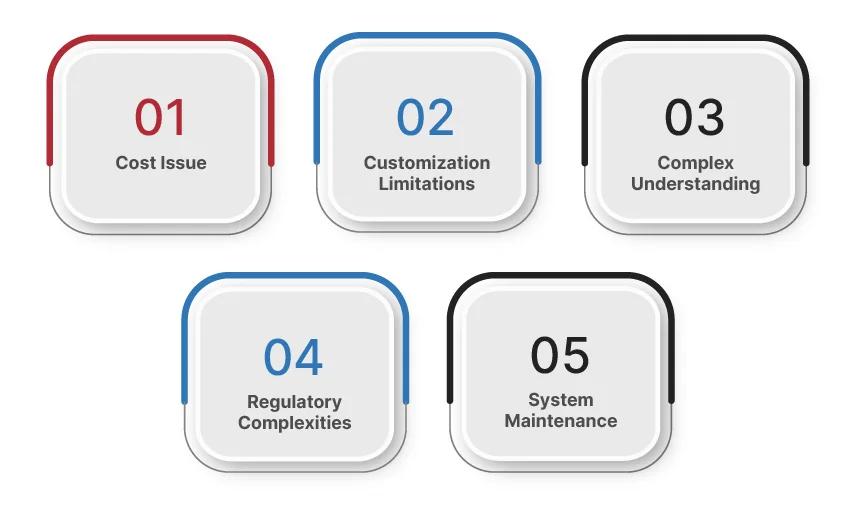
Launching or upgrading your ERP solution is a massive project. No matter where you start from, there are bound to be some challenges that can hinder your ERP implementation progress. Let’s take a quick look at some of the challenges that require a rigorous Oracle Testing Strategy for large-scale ERP projects:
Cost Issue:
Licensing and implementation costs are a bit high and may prove overwhelming for small and mid-sized enterprises.
Customization Limitations:
Oracle Cloud is versatile but may not offer the high level of customization options required by enterprises.
Complex Understanding:
Oracle Cloud ERP is complex to implement, often requiring a steep learning curve.
Regulatory Complexities:
One must comply with regulations at national and international levels; however, managing compliance changes is difficult.
System Maintenance:
Enterprises need to constantly upgrade systems to keep up with new updates and fixes, which is critical.
How Does Testing Ensure Successful Oracle Cloud ERP Implementation?
A successful Oracle testing validates that the system configuration aligns with business requirements and enables seamless integration between third-party APIs and ERP modules. This helps reduce post-implementation risks, such as disrupted operations and system failures. Here’s how Oracle ERP testing can benefit your enterprise:
1. Find and fix issues causing failures, data loss, or poor performance, enabling smooth business operations.
2. End-to-end business process validation, such as Procure-to-Pay (P2P), Order-to-Cash (O2C), and Record-to-Report (R2R), ensuring workflows correctness and alignment with business goals.
3. Finance-critical validations prevent costly errors in financial transactions and ensure compliance with industry standards.
4. Ensure overall ERP system functions as expected across multiple interconnect modules.
5. Address security loopholes such as unauthorized access and data breaches to ensure compliance with industry regulations.
6. Ensure safeguard against financial discrepancies or system miscalculations.
7. Run performance tests to evaluate the application’s capability to handle expected workloads and its scaling efficiency.
8. Confirm all features work as intended and fulfill business requirements to prevent potential financial losses.
9. Ensure new updates and features work properly without bringing in new bugs.
10. Lower long-term system maintenance expenses by reducing downtime and support needs.
Testing Phases in Oracle ERP Implementation
Oracle ERP testing is structured around several critical phases. It helps ensure functional accuracy, optimized system performance, and data integrity. Phases include:
Testing Phases
Process
Result
Unit Testing
Performed after configuring a specific module or component.
Verifies unit workflow and approval rule in isolation.
System Integration Testing (SIT)
Validates that Oracle modules and third-party APIs work seamlessly.
Focuses on End-to-end data flow to ensure that the correct information gets transferred.
Data Migration Testing
Ensure accuracy of extracted data from legacy systems and ensure it is loaded into the Oracle environment.
Verify data cleanliness, integrity, and mapping accuracy.
Prioritize critical areas like financial transactions, compliance modules, and third-party system integrations.
Ensure business-critical aspects are thoroughly tested to minimize costly post-deployment issues.
Test Automation Strategy for Oracle ERP
Let’s say you want to test whether you can create and approve a purchase order (PO) in your Oracle Cloud ERP. Here are the steps you need to follow:
Step 1: Identify Test Scenario:
You know you want to create a PO, and it must be approved by the right user. Clearly define user roles, test data, and expected results.
Step 2: Select Test Automation Tool:
Choose the right automation testing tool, such as Selenium, Katalon Studio, or Tricentis Tosca. Select one that aligns well with Oracle UI, integrates with CI/CD tools, and supports test data.
Step 3: Run Automation Test Script:
The next step is to write the test cases. Let’s take Selenium and Java as an example. The script will open Oracle ERP > Log In > Navigate to PO modules > Insert order details > Submit form > Check PO approval status.
Step 4: Leverage Data-Driven Testing:
Run the same test cases using varying data. Make sure to store your data in an Excel or CSV file. Use the test loop to pick a row and submit a new PO.
Step 5: Run Regression Test:
Automate test script execution and confirm that the status is “Approved,” the PO is approved by the correct person, and the PO is showing in reports and dashboards.
Why Should You Automate Oracle Application Testing?
You should automate Oracle application testing because the failure cost is too high, and systems are deeply interconnected. Even a minor defect in Oracle ERP can disrupt payroll, compliance, or finance. Manual testing rarely consistently catches those risks.
Automation empowers your teams with repeatable regression coverage when patches and quarterly updates arrive. It means faster releases, fewer production surprises, and confident operational excellence.
Impact of Quarterly Updates on Oracle ERP Testing
Oracle releases quarterly updates that bring new patches, features, and enhancements. With each update, regression testing becomes critical to ensure correct working of previous features. Automating these regression tests is crucial to reduce production issues while maintaining system stability across frequent releases. Additionally, release validation cycles must validate every update integrates correctly without introducing new bugs.
How Does TestingXperts Help with Oracle Testing Services?
As enterprises accelerate their adoption of Oracle ERP solutions, your Cloud/hybrid environment, patches, upgrades, and customizations need precision. However, maintaining quality and business continuity during these events is challenging, and traditional testing methods will not cut it.
At TestingXperts, we combine Oracle testing strategy with automated regression suites and intelligent test orchestration tailored to your Cloud ERP implementation. Our Oracle ERP testing approach ensures seamless integration and efficient validation. We built QA strategies around the unique challenges you face in large-scale ERP implementations, offering tailored solutions for every stage.
We align our QA strategies with your release cycle and business priorities to eliminate downtime risks and accelerate go-lives. Our expertise helps you achieve:
99% uptime during Oracle deployments
60% faster release cycles
80% reduction in post-go-live defects
3x test efficiency improvement
Do you want to optimize the Oracle testing strategy for your ERP implementation? Contact our Oracle testing experts to know more.
Conclusion
To maximize your Oracle Cloud ERP transformation, rigorous pre- and post-deployment validation is essential. Without a structured strategy spanning functional, integration, and performance testing, you risk operational disruption and costly defects.
Leveraging automated testing mitigates these risks by accelerating release cycles and expanding test coverage during frequent updates. Ultimately, investing in a robust, automated testing framework ensures system stability, maintains compliance, and guarantees a seamless, confident go-live.
Manjeet Kumar, Vice President at TestingXperts, is a results-driven leader with 19 years of experience in Quality Engineering. Prior to TestingXperts, Manjeet worked with leading brands like HCL Technologies and BirlaSoft. He ensures clients receive best-in-class QA services by optimizing testing strategies, enhancing efficiency, and driving innovation. His passion for building high-performing teams and delivering value-driven solutions empowers businesses to achieve excellence in the evolving digital landscape.
FAQs
What is the best approach for Oracle ERP data migration testing?
The best approach is to validate data before, during, and after migration. Focus on:
Source-to-target mapping
Data completeness and accuracy
Business rule validation
Reconciliation of financial and
Transactional records
This helps catch defects early and reduces risk during Oracle ERP cutover.
How do I validate end-to-end Oracle ERP business processes like P2P, O2C, and R2R?
Validate end-to-end Oracle ERP processes by testing real business flows across systems, roles, and approvals. Cover full scenarios for Procure-to-Pay, Order-to-Cash, and Record-to-Report, including exceptions, integrations, and reports.
What are the benefits of automating Oracle application testing?
Automating Oracle application testing improves speed, repeatability, and coverage. It helps teams:
Run regression tests faster
Reduce manual effort
Catch defects earlier
support frequent updates and releases
How do I choose the right Oracle testing strategy for a large-scale ERP implementation?
Select your Oracle testing strategy based on business risk, process complexity, integrations, and release timelines. Start with critical workflows, high-impact data, and compliance-heavy areas. A strong strategy balances manual and automated testing, aligns with implementation phases, and supports both functional quality and business continuity.
What business processes should be prioritized first in Oracle ERP testing?
Prioritize Oracle ERP testing for processes that directly affect revenue, finance, operations, and compliance. These usually include:
Procure-to-Pay
Order-to-Cash
Record-to-Report
Inventory and supply chain flows
Payroll or tax-related transactions
Testing these first reduces operational and financial risk.
How can Oracle ERP testing help reduce post-go-live defects and downtime?
Oracle ERP testing reduces post-go-live defects by finding issues in workflows, integrations, data migration, and user roles before production. It improves release readiness through regression testing and business validation. The result is smoother deployment, fewer disruptions, and lower downtime during and after go-live.
How does TestingXperts accelerate Oracle ERP release cycles?
TestingXperts accelerates Oracle ERP release cycles through risk-based testing, reusable automation, and early validation of critical business flows. Its approach helps teams shorten regression time, improve test coverage, and detect defects sooner.
What business outcomes can enterprises expect from TestingXperts’ Oracle testing approach?
Enterprises can expect faster releases, fewer production defects, stronger process reliability, and lower business risk. TestingXperts helps improve Oracle ERP quality across core workflows, integrations, and upgrades.