Recommended Blogs

AI Governance in Banking: Mitigating Risks and Maximizing Benefits

 Last Updated: January 19th, 2026
 Read Time: 7 minutes
Table of Content
- The Risks of AI Usage in Banking Services
- What is AI Governance and its Role in Banking?
- Why is There a Growing Need for AI Governance in Finance?
- Ethics and Compliance in the Banking Sector for AI
- How Does AI Improve Risk Management in Banks?
- AI-Powered Customer Service and Personalization in Banking
- What are the Best Practices for Implementing AI Governance in Banking?
- How can Tx help with AI Governance in the Banking Industry?
- Summary
Share On


In the last two years, artificial intelligence (AI) and GenAI have become the top trending topics in the banking industry. According to the Evident AI Index, JP Morgan is ranked first in the race for AI maturity within banking. The reports show how much resources, effort, and focus firms are injecting into the AI landscape. From automating routine tasks to growing reliance on AI solutions for optimizing financial services, AI offers various opportunities for banking and enhancing customer experience. However, the increasing adoption of AI in the banking industry also raises concerns for comprehensive AI governance. Although this technology promises various benefits for banks and their clients, utilizing it efficiently and securely is critical. Even governments across the globe are implementing strict AI governance practices in the banking sector to ensure the secure usage of this technology.
Banks must ensure their AI models are appropriately validated and have good governance to keep AI ethical and safe in the financial infrastructure. In addition, banking organizations also realize that if implemented correctly, governance will steer the AI landscape toward an impactful and beneficial tool in financial services.
The Risks of AI Usage in Banking Services
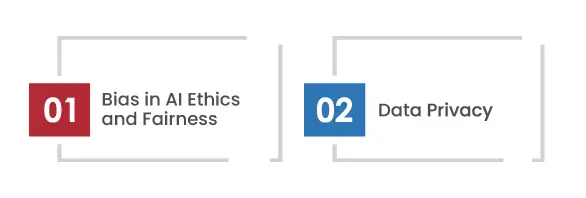
The data, privacy, security, and other concerns regarding AI utilization haven’t been resolved much in the past few years. This indicates more protection is needed to give users confidence about AI and its applications in banking services. Some of the risks associated with AI usage in banking are:
Bias in AI Ethics and Fairness:
As per an official by Gartner, “Algorithm bias is one of the major risks/concerns as AI systems can copy the existing biases received from training data. It may cause biased treatment in credit scoring, fraud detection, or loan approvals. Also, AI models’ lack of explainability and transparency raises regulatory compliance issues, which might erode user trust.” On the second note, concerns about AI ethics, bias, and fairness are the top three barriers to its implementation. As AI models like GenAI become more autonomous and advanced, banks must pace their AI governance efforts to address and manage these risks.
Data Privacy:
As AI technologies are still evolving, the chances of risks arising along with benefits are also high. One of the most significant issues is privacy. AI needs data and can extract personal information from sources like social media, images/videos, emails, etc. The thing is, the respective person will not even know that his/her data is being collected and analyzed. This causes misuse of PII (personally identifiable information) without the consent of the respective user. According to a report by EY, “Data security risks, transparency, and privacy are some of the highly ranked risks in the AI issues, and GenAI has multiple these concerns tenfold.”
What is AI Governance and its Role in Banking?
An AI governance framework consists of processes/standards/guidelines that allow businesses to ensure their AI systems and tools’ safety, credibility, and compliance. It navigates AI research, development, deployment, and application to ensure fairness and security for human rights. In banking services, AI governance ensures compliance with regulations, builds trust, mitigates risks, and facilitates ethical AI usage. By guaranteeing regular audits, transparency, and documentation of AI operations, financial institutions can easily comply with regulations like the EU AI Act.
Let’s take a look at some of the areas that AI governance can help banks with:
| Governance Area | Issue | Governance Approach |
| Data Management | Ensuring data quality, compliance, and privacy with regulations like CCPA, GDPR, etc. | Implement mandates on anonymization, have transparent consent practices in place, and ensure compliance with privacy regulations. |
| Transparency in AI Model | Lack of transparency on how AI models use data and make decisions, causing potential biases. | Requirement for explainable AI to audit decisions and make regulators understand them. |
| Risk Assessment | Problems in predicting AI-driven risks like model drift, unintended results, etc. | Adopt regular stress testing and scenario analysis for AI systems. |
| Accountability | Ambiguity over who is accountable for AI system decisions in case of failures or errors. | Draft clear roles and accountability frameworks for AI decision-making processes. |
| Ethical Usage of AI | Risk of deploying AI solutions that prioritize profit over fairness and social responsibility. | Integrate fair practices and governance principles tailored for AI usage in banking operations. |
| Customer Loyalty and Trust | Distrust among customers regarding AI’s credibility and its use of their personal data or decision-making accuracy. | Ensure transparency, educate users about AI usage, and guidance on customer communication. |
| Ensuring Compliance | Lack of continuous monitoring process for AI model compliance. | Implement real-time monitoring systems and regular reporting of AI system performance. |
| Operational Resilience | Managing system outages or cyberattacks against AI models. | Regulations emphasizing robust AI system recovery plans and cybersecurity standards. |
Why is There a Growing Need for AI Governance in Finance?
AI governance in finance will help banks and other financial bodies ensure compliance with AI usage regulations, support ethical AI use, manage risks, and build customer trust. As regulations like the EU AI Act demand strict adherence to the ethical use of AI, having a governance framework will help financial entities ensure transparency in their AI operations.
A practical AI governance framework will identify, analyze, and help remediate risks like data/decision biases, brand reputation damage, and system failures. It will also help make AI systems more reliable and robust. One of the best examples is the collaboration of the Bank of England with Holistic AI. They conducted a detailed analysis of the deep learning models to analyze their impact on the financial sector.
Ethics and Compliance in the Banking Sector for AI
AI ethics in banking is about applying AI in a responsible way that protects customers’ rights, makes sure everyone is treated fairly, and meets the rules set by regulators. As AI has more of an effect on credit decisions, fraud detection, and interactions with customers, ethical mistakes can soon become compliance failures.
Some important areas of attention are:
- To stop unfair lending and credit scoring, we need to make sure that everyone is treated fairly and that bias is reduced.
- Make AI-driven judgments clear and easy to understand for both regulators and customers.
- Data privacy and consent management that follows the rules of the GDPR, CCPA, and banking-specific laws
- People need to be in charge of big decisions that could hurt customers or put money at risk.
Strong AI compliance in the banking sector makes sure that innovation doesn’t outstrip governance. This helps institutions implement AI without having to worry about breaking the law.
How Does AI Improve Risk Management in Banks?
AI makes risk management better by letting banks find, forecast, and respond to threats faster than systems that are dependent on rules. AI models don’t just look at past thresholds; they also look at patterns in transactions, consumer behavior, and system performance all the time.
This is how AI makes managing banking risks better:
- Predictive risk modeling finds new credit, market, and operational issues before they become big problems.
- Model drift detection alerts when AI choices don’t follow the rules.
- Banks can use scenario simulation to put AI systems through their paces by putting them through harsh situations.
- Continuous monitoring makes ensuring that AI governance policies are followed as they change.
This basically means that there are fewer blind spots and that action can be taken more quickly when threats start to show up.
AI-Powered Customer Service and Personalization in Banking
AI-powered customer service lets banks have faster, more useful conversations with customers without losing their trust or privacy. AI changes the way banks interact with consumers, from chatbots to personalized product suggestions.
Some important uses are:
- Smart virtual helpers that are available 24/7
- Insights on your finances depending on how you spend money
- Alerts that predict problems with your account or strange activities
- Using sentiment analysis to make services better
TestingXperts is widely used by banks who use AI for customer care to check AI models, make sure decisions are accurate, and make sure that governance controls are built into all consumer-facing AI systems.
What are the Best Practices for Implementing AI Governance in Banking?
AI is changing the financial market by driving operational efficiency, upscaling CX, and enabling the banking industry to leverage cost-saving benefits. However, effective AI governance will depend on the best practices that combine human and societal values. The financial institutions have to adopt a delicate balancing act supported by the following AI governance practices:
-
- Adopting a risk-based approach to implement governance practices in high-risk areas where AI severely impacts sensitive/personal data (account holder’s name, addresses, transaction details, etc.) and critical business decisions.
-
- Another practice is to engage with all stakeholders playing critical roles in the governance process and ensure better accountability and comprehensive oversight.
-
- Leverage advanced automation tools and technologies to monitor, audit, and ensure compliance with AI-powered regulatory checks.
- Promote transparency and accountability in AI operations to facilitate decision-making and assign clear roles and responsibilities to respective stakeholders.
How can Tx help with AI Governance in the Banking Industry?
TestingXperts (Tx) offers customized AI consultancy and testing services to help its clients enhance the implementation of AI solutions and governance practices in the banking industry.
Our expertise includes:
AI Model Evaluation and Validation:
We conduct assessments of your AI models to ensure they meet the industry standards of compliance, accuracy, and unbiasedness. The process involves E2E testing to identify and mitigate biases and ensure your AI models operate effectively and ethically.
Data Quality Management:
We know that high-quality data is the core for training AI systems. Our experts implement robust data governance frameworks to ensure data security, integrity, and compliance with regulatory standards, crucial for maintaining accuracy and trust in AI applications.
Continuous Monitoring:
To maintain compliance and effectiveness of AI models over time, we offer comprehensive continuous monitoring services. This approach ensures that your AI models remain aligned with changing regulatory requirements and industry best practices thus preventing potential issues.
Compliance and Ethical Audits:
We perform comprehensive audits and testing to verify your AI systems adhere to banking ethical and regulatory guidelines. The process includes assessing AI models for compliance with AML regulations, ISO 20022, and other financial standards. This also reduces the risk of regulatory penalties.
Summary
AI governance is critical to ensure the success of the implementation of the AI model in the banking sector. It would help ensure AI technologies’ safe, effective, and ethical usage. As banks increasingly implement AI solutions for tasks like fraud detection, customer personalization, and credit scoring, risks like algorithm bias, lack of transparency, and privacy breaches have surfaced.
Effective AI governance in banking will help mitigate these risks by ensuring compliance with regulations, promoting ethical practices, and protecting data. Partnering with Tx will allow you to implement AI Governance best practices, ensuring operational resilience, regulatory adherence, and user trust. To know more about Tx banking and financial app testing services, contact us now.

Associate Director at TestingXperts
Bharath Babu is an Associate Director at TestingXperts with specialized expertise in core banking transformation, program and project management, and banking, financial services, and insurance (BFS) practice. He has a strong focus on digital banking and payments, driving strategic initiatives and delivery excellence in complex technology engagements across financial services.
FAQs
How is AI used in banking risk management?
AI is used in banking risk management to assist financial institutes understand and mitigate risks like money laundering, credit risk, vendor risks, etc. It helps in better decision-making by identifying patterns and predicting outcomes.
What are the risks associated with AI governance in banking?
AI governance in banking may pose certain risks, such as AI bias, privacy and security, transparency, regulatory gaps, user mistrust, inconsistent standards, etc.
How can the risks of AI be mitigated through AI consultancy and testing services?
With regular testing and monitoring, businesses can keep track of their AI system performance and identify potential risks sooner. Partnering with a professional AI consultancy firm would allow organizations to remediate AI risks faster and reduce the threat impact.
How does TestingXperts (Tx) mitigate AI risks and support AI governance in the banking industry?
Tx ensures successful AI implementation by aligning it with accuracy, performance standards, compliance, and data security. We assist our clients in mitigating risks and supporting AI governance in the banking industry.
How does AI governance improve risk management in banks?
AI governance makes sure that AI models are always being watched, can be understood, and follow the rules set by regulators. By making AI systems accountable, verifiable, and auditable, it lowers risks to operations, compliance, and reputation.
What are the regulatory requirements for AI in banking?
Regulations are all about being open, fair, protecting data, and being responsible. The EU AI Act, GDPR, and financial supervisory standards all say that models must be explainable, controls must be documented, and compliance must be checked all the time.
How does AI help prevent fraud in banking systems?
AI finds fraud by looking at transaction patterns in real time, spotting unusual behavior, and learning how to deal with new ways of cheating. AI models change all the time, which makes them better at finding things and lowers the number of false positives.
How can AI improve customer service and personalization in banking?
AI makes it possible to give personalized suggestions, fix problems faster, and send service alerts before they happen. Governance makes ensuring these systems protect people’s privacy, don’t show bias, and always give reliable results.
Discover more